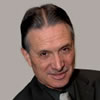
On Monday, January 3, Jerry Brown starts his second run at governing the Golden State. He inherits a host of problems, some dating back to his first run as governor.
Collective bargaining for government employees has not existed in California from times immemorial. It started during Jerry Brown’s first administration in the 1970s and has since grown into de-facto rule by government employee unions. But the governor has no regrets.
“I’m very proud to have created this system that gave workers a choice,” he said in March, in a speech to members of the Service Employees International Union (SEIU), one of the most powerful government employee unions. Earlier that month, when he was criticized for allowing collective bargaining for state employees, he responded: “It is democratic, and I think we can make it work.” Actually, the system Brown is proud of starting is not very democratic, but it certainly works well for government employee unions.
They get to elect those with whom they negotiate, and since there is no competition in government, the incentive is to make the most extreme demands possible. The incentive for politicians, in return for votes, is to give the government unions everything they want in pay, pensions and benefits, whether or not the state can afford it. This launches an endless cycle of spending, taxes, and government growth, leading to our current unsustainable situation.
Besides a deficit of more than $25 billion, California faces massive unfunded pension and health care obligations, by some accounts in the hundreds of billions. David Crane, advisor to outgoing governor Arnold Schwarzenegger, noted that money is already being diverted from education, transit, parks and other programs to pay only part of these obligations. “Instead of a government of the people, by the people and for the people,” Crane wrote, “we have become a government of its employees, by its employees and for its employees.”
That is not a very “democratic” system given that state employees are a tiny minority of state workers, and that, overall, unions represent less than 20 percent of all California workers. The more than 80 percent of California workers who are not union members don’t get to elect those with whom they negotiate. But they must pay for the upscale salaries and benefits of state employees.
Government employee unions also have an incentive to resist reforms that downsize government. Any proposal to trim government, by any politician of any party, is certain to draw heated opposition from government union bosses, who are not subject to a vote by the people. The worst government union reactionaries are the teacher unions, always screaming for more money. According to Los Angeles major and former Assembly Speaker Antonio Villaraigosa, teacher unions are a major obstacle to education reform.
California’s second-chance governor remains happy with the system he set up. He will have to make some cuts that may displease some union bosses, but as long as rule by government employee unions prevails, the prospects for reform remain dim.
After the election, The Economist published a piece subtitled “for once, California’s prospects seem better in the long term than in the short.” However, the magazine’s special edition, The World in 2011, raises this possibility: “California’s new governor cancels its debt, declaring the nation’s most populous state bankrupt.”
Also on Monday Arnold Schwarzenegger (R-CARB) ends his six-year stint as governor. Give it up for the governor who touted a “post-partisan” vision but leaves the state in post-prosperity conditions, to be prolonged by his self-proclaimed legacy, the California Global Warming Solutions Act of 2006 (AB 32). And on his way out the door he picked Barbra Streisand for the California Hall of Fame. Happy New Year everybody.

Jerry’s Kids: In 2011 California will still be ruled by government employee unions
K. Lloyd Billingsley
On Monday, January 3, Jerry Brown starts his second run at governing the Golden State. He inherits a host of problems, some dating back to his first run as governor.
Collective bargaining for government employees has not existed in California from times immemorial. It started during Jerry Brown’s first administration in the 1970s and has since grown into de-facto rule by government employee unions. But the governor has no regrets.
“I’m very proud to have created this system that gave workers a choice,” he said in March, in a speech to members of the Service Employees International Union (SEIU), one of the most powerful government employee unions. Earlier that month, when he was criticized for allowing collective bargaining for state employees, he responded: “It is democratic, and I think we can make it work.” Actually, the system Brown is proud of starting is not very democratic, but it certainly works well for government employee unions.
They get to elect those with whom they negotiate, and since there is no competition in government, the incentive is to make the most extreme demands possible. The incentive for politicians, in return for votes, is to give the government unions everything they want in pay, pensions and benefits, whether or not the state can afford it. This launches an endless cycle of spending, taxes, and government growth, leading to our current unsustainable situation.
Besides a deficit of more than $25 billion, California faces massive unfunded pension and health care obligations, by some accounts in the hundreds of billions. David Crane, advisor to outgoing governor Arnold Schwarzenegger, noted that money is already being diverted from education, transit, parks and other programs to pay only part of these obligations. “Instead of a government of the people, by the people and for the people,” Crane wrote, “we have become a government of its employees, by its employees and for its employees.”
That is not a very “democratic” system given that state employees are a tiny minority of state workers, and that, overall, unions represent less than 20 percent of all California workers. The more than 80 percent of California workers who are not union members don’t get to elect those with whom they negotiate. But they must pay for the upscale salaries and benefits of state employees.
Government employee unions also have an incentive to resist reforms that downsize government. Any proposal to trim government, by any politician of any party, is certain to draw heated opposition from government union bosses, who are not subject to a vote by the people. The worst government union reactionaries are the teacher unions, always screaming for more money. According to Los Angeles major and former Assembly Speaker Antonio Villaraigosa, teacher unions are a major obstacle to education reform.
California’s second-chance governor remains happy with the system he set up. He will have to make some cuts that may displease some union bosses, but as long as rule by government employee unions prevails, the prospects for reform remain dim.
After the election, The Economist published a piece subtitled “for once, California’s prospects seem better in the long term than in the short.” However, the magazine’s special edition, The World in 2011, raises this possibility: “California’s new governor cancels its debt, declaring the nation’s most populous state bankrupt.”
Also on Monday Arnold Schwarzenegger (R-CARB) ends his six-year stint as governor. Give it up for the governor who touted a “post-partisan” vision but leaves the state in post-prosperity conditions, to be prolonged by his self-proclaimed legacy, the California Global Warming Solutions Act of 2006 (AB 32). And on his way out the door he picked Barbra Streisand for the California Hall of Fame. Happy New Year everybody.
Nothing contained in this blog is to be construed as necessarily reflecting the views of the Pacific Research Institute or as an attempt to thwart or aid the passage of any legislation.