
A simple few steps to provide more affordable, safer housing
By Sal Rodriguez | February 6, 2026
Over the past few years, states and cities across the country have moved to cut red tape around their housing markets in order to spur greater supply and, in the long run, control or even reduce high housing prices.
From zoning and land-use reforms to streamlining permitting processes and broader adoption of by-right approvals, many jurisdictions are trying to make it easier to build more housing.
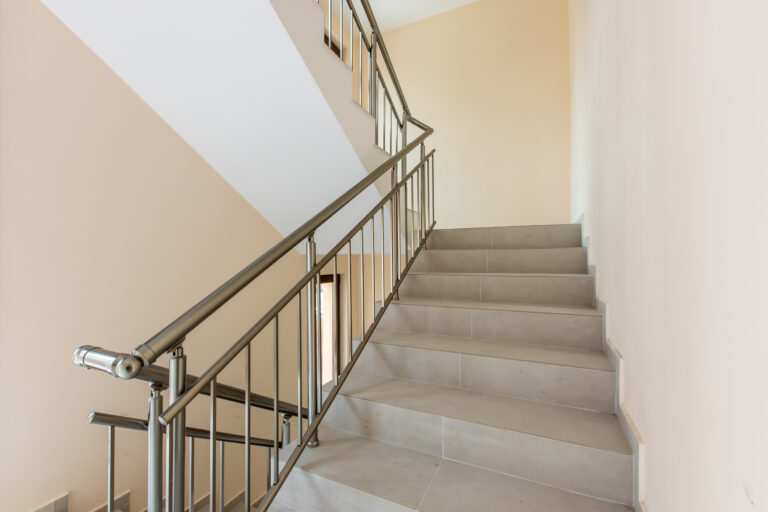
One of the growing pushes as of late is for states and cities alike to develop standards for and legalize mid-rise buildings up to a certain height (usually no higher than four to six floors) with a single stairwell rather than the typical two stairwells linked by a corridor.
You can probably intuit why advocates of more housing would propose allowing single-stair buildings again: the two-stair mandate takes up more space that could otherwise be used for more or bigger units and restricts what kind of structures can work in parcels of varying sizes.
They are also less expensive to build, which certainly sounds like something to consider if the goal is housing affordability. As researchers at Pew Charitable Trusts noted in a report earlier this year, “Single-stairway four-to-six-story buildings with relatively small floor plates cost 6% to 13% less to construct than similar dual-stairway buildings. They can also fit on smaller infill lots, potentially increasing the supply of apartments in high-opportunity urban and suburban neighborhoods.”
Unlike other housing reforms, namely those pertaining to zoning or curtailing discretionary reviews, single-stair reform seems less likely to invite broad-based backlash. It’s not about whether taller apartments should suddenly be legal to build in areas zoned for single-family housing only or whether local residents will have the chance to harangue city officials about this or that project. It’s just a building design.
Hence, the push for single-stair reform seems to make both practical and political sense.
Yet few major cities in the United States allow single-stair buildings. New York City, Honolulu, Portland, Ore., and Seattle are among the exceptions. Seattle’s legalizing of single-stair buildings dates back to the 1970s, when Mayor Wes Uhlman established a Building Code Advisory Board explicitly tasked with suggesting changes to the city’s building cost to “encourage in-city living, redevelopment and new construction.”
In November, Portland updated its building codes allowing single-stair buildings up to four stories in height, so long as they meet specified conditions. “Included in those conditions are requirements that the net floor area of each story not exceed 4,000 square feet and that no more than four dwelling units are allowed on any story,” the city explains.
Meanwhile, in September, Culver City in the Los Angeles area became the first city in California to legalize single-stair apartments as tall as six stories, with specified conditions similar to those in Portland and an array of fire prevention measures.
This is bigger than a staircase,” said Councilman Bubba Fish, who introduced the single-stair ordinance in Culver City. “The vast majority of the world builds apartments this way. We are an outlier. It touches on the housing crisis, the affordability crisis.”
Which speaks to an important part of this debate: he’s right, American building restrictions are an anomaly.
There is a temptation to argue that perhaps it’s a matter of safety and Americans are just more conscientious about safety. The latter may or may not be true, but there’s no evidence banning single-stair buildings is doing much to save lives.
The Pew report mentioned earlier found “four fire-related deaths in New York City and Seattle’s modern single-stairway buildings from 2012 to 2024” and notably concluded, to spare you the details of those unfortunate deaths, the “lack of a second stairway did not play a role in any of those fatalities.”
The report also compared the fire-related death rates of New York City’s thousands of single-stair buildings to other buildings and found no difference. And finally, it also assessed fire-related deaths in the Netherlands, where single-stair buildings are commonplace, and likewise found no differences than with other buildings. “Overall, residential fire-related death rates in the Netherlands are one-third those of the U.S.,” they observed.
A key point of consideration is that newer buildings, made of less combustible materials than older buildings and equipped with fire prevention measures as simple as self-closing doors and sprinklers, are simply less dangerous than older buildings, single-stair or not. It can be argued that, rather than making people less safe by opening the door to single-stair residences, we are keeping people less safe in older buildings by constraining the supply of newer housing.
There only seem to be benefits to legalizing single-stair housing. You get more and lower-cost housing. You get newer and safer buildings. What’s not to like?
Of course, single-stair reform isn’t a panacea. All of the major American cities previously mentioned all have a housing crunch of their own that they are working through. Seattle hasn’t been able to fend off the negative consequences of restrictive zoning policies or slow permitting processes just because it’s allowed single-stair apartments. New York City is likewise no one’s idea of affordable, with the Big Apple’s housing markets constrained by red tape, rent control and tenant protections so robust they chill the market.
Even so, more cities and states should look into legalizing single-stair residences if they want to expand their options for promoting housing abundance. The goal should be fairly simple: legalize housing, get city hall out of the way and let the market work.
Sal Rodriguez is opinion editor for the Southern California News Group and a senior fellow with the Pacific Research Institute. He is the author of Dynamism or Decay? Getting City Hall Out of the Way, published by the Pacific Research Institute.