

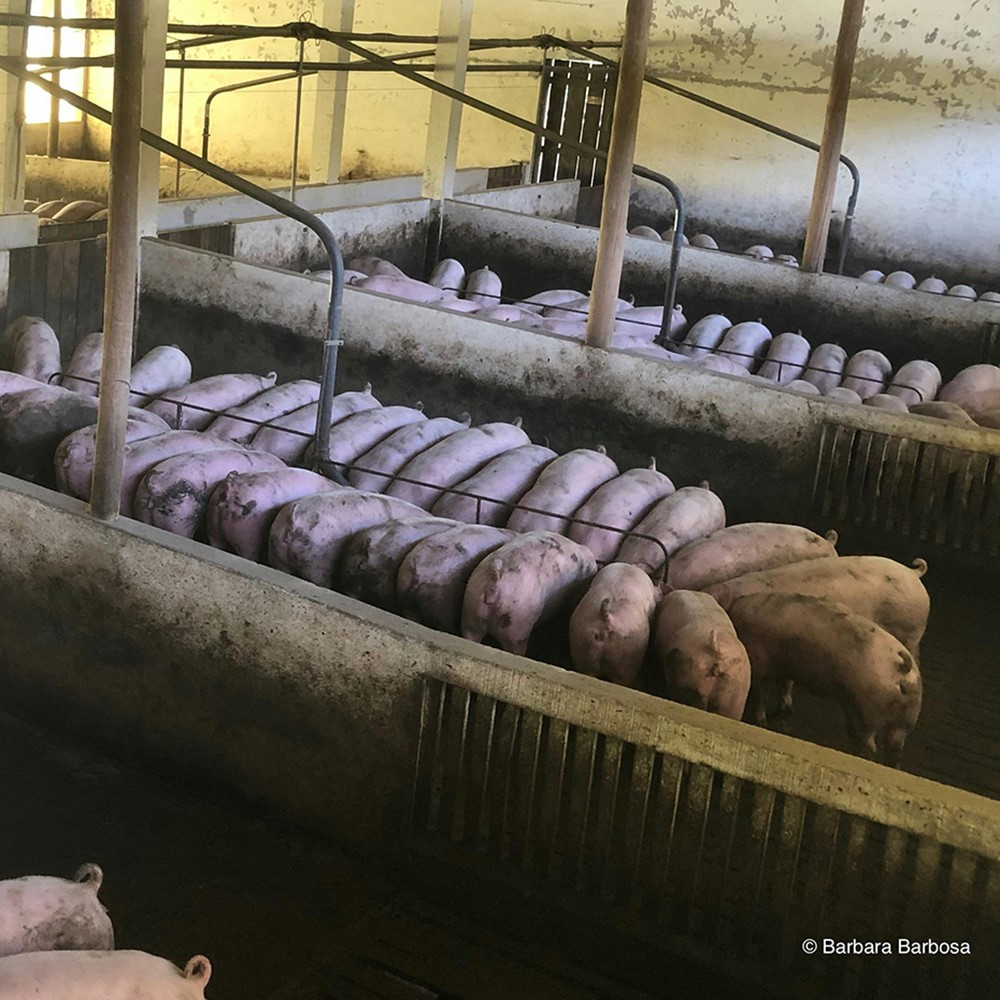
While the controversial Prop 12 was passed by California voters in 2018, it was not fully implemented nationwide until January 2024. Under the requirements of Prop 12, veal calves must have at least 43 square feet of pen space, egg-laying hens must be housed in “cage-free” environments, and hogs must be housed in a minimum of 24 square feet of space, which no part of the pen able to touch the animal with its body fully extended.
The real hiccup to Prop 12 has always been in how it is applied.
California voters approved the implementation of Prop 12, effectively making the state an independent regulatory entity and forcing other states to comply with California’s law if they wished to have access to California’s markets.
The newest iteration of the Farm Bill would undo the regulatory hog-tying Prop 12 imposed upon pork producers around the country by taking away the ability of states to govern how livestock is raised in other states. It would also restrict states from prohibiting the sale of meat from another state based on how it was produced.
This rolling back of Prop 12 was met with mixed reviews. The National Pork Producers Council hailed it as a long overdue solution to an industry challenge that saw a 12 percent drop in the number of small pork production operations nationwide in the first quarter of 2025. Current NPPC Vice President and Ohio-based pork producer, Pat Hord, a farmer who had already retrofitted his farm to be Prop 12-compliant, noted the potential repeal of Prop 12 requirements did not make his investment in the changes in vain.
“Whatever I do today could need to be changed when a new state decides they want a different housing standard,” Hord said, in support of the repeal, which would stop additional instability nationwide.
Opponents of a Prop 12 repeal have said the language “tramples” on the voice of the voters who supported having hogs raised with the confines of gestation crates. However, there is no objective evidence to support the claim that removal of gestation crates improves the living conditions for hogs, according to the American Veterinary Medical Association.
There is, however, strong evidence that implementation of Prop 12 has significantly increased the cost of pork, at least inside the borders of California, where the meat costs approximately 20 percent more, according to the U.S. Department of Agriculture, than it does elsewhere in the country.
Ultimately, a repeal of Prop 12 makes sense not just for pork producers but for consumers, too. Pork has long been seen as the “other” affordable meat and is a staple in Latin and Asian cuisines. By driving the cost of pork higher, it prices many low- and middle-income families into buying less of a source of lean, nutritious protein during a time when grocery prices are already high.
The Farm Bill may perhaps be the best vehicle by which to remove the burden Prop 12 represents for consumers and pork producers alike.
Pam Lewison is a fourth-generation farmer, Pacific Research Institute fellow, and ag research director for Washington Policy Center.