

As LAist’s David Wagner reported, only about 16% of Orange County households earn the $350,400 needed to afford the county’s median home price of $1,442,930, according to the California Association of Realtors.
That’s all despite Gov. Gavin Newsom’s office boasting on July 13 about his record of “hundreds of pieces of legislation signed since 2019, and groundbreaking CEQA reform enacted last year.” CEQA is the California Environmental Quality Act.
Is there a better way? A way that works? Yes, although it’s painful for Californians to name it: Look to Austin, Texas.
After Silicon Valley, Austin’s so-called Silicon Hills are America’s top technology center, with Apple, Amazon.com and Alphabet/Google expanding area operations. Then there’s Elon Musk’s massive presence, with Tesla Gigafactory Texas. And two years ago, he moved his headquarters for X from San Francisco to Bastrop, 33 miles southeast of Austin.
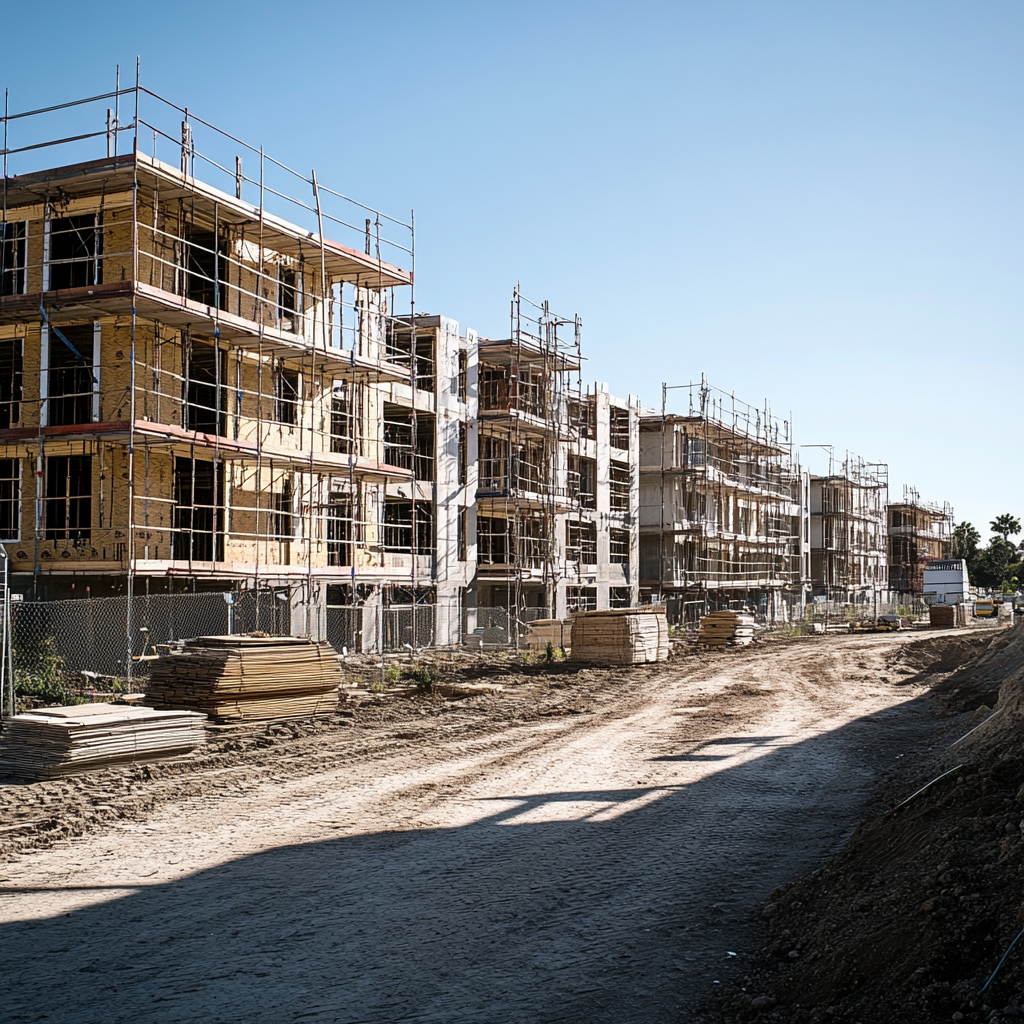
A recent Barron’s feature chronicled the “ambitious housing plan” behind a decade of Austin’s deliberate policy changes that unleashed a construction boom, pushed home prices down and moved sales up. Zoning rule amendments and fewer requirements for some developments “set the stage for a multiyear construction boom as the population expanded. The result is that supply has increased, prices are down, sales are up and buying costs have shrunk.”
Before the reforms, Austin suffered a California-style housing crunch. Between 2010 and 2019, rents jumped almost 93%, more than in any major American city. Home prices climbed 82%, the highest of any metro area in the Lone Star State.
Starting around 2015, Austin took these actions:
- Rezoned land near jobs and transit for large apartment buildings;
- Reduced and then eliminated parking mandates citywide;
- Streamlined permitting and site plan review so projects stopped getting stuck in a bureaucratic swamp;
- Adopted Phase 1 of the Home Options for Mobility and Equity (HOME) initiative in December 2023. It allowed up to three homes on lots that previously permitted only one;
- Adopted Phase 2 of the HOME initiative in May 2024. It slashed the minimum lot size from 5,750 square feet to just 1,800. That was a nearly 70% cut that lets builders put townhomes and small homes where only one large house could stand before.
The results, in the Barron’s summary: “Austin’s housing market experienced a significant correction, with home prices dropping 17% and rents declining 19% since 2022.”
One key was pushing aside objections from the real estate industry and property owners whose valuations dropped. “The correction had to happen,” said Tommy Tucker, president of the board of directors for the Home Builders Association of Greater Austin. “As a real estate developer, I don’t like to see that. But at the same time, as a representative of the home-building industry — it had to happen.”
A second key was ignoring claims high-income earners were the reforms’ main beneficiaries. Community Not Commodity, an activist group, griped in a March 2026 post on its website, “The city wants neighborhoods to metamorphose into commercial/residential enclaves for high‑income earners, abandoning their legacy as places for working families to raise their children.”
But it’s Economics 101: Increase supply faster than demand, and prices will fall all along the spectrum. At least CNC didn’t call it “trickle-down economics,” the usual epithet used when freer markets first help the wealthy, with benefits then flowing downward to all levels of income.
Austin’s reforms have worked so well they even gained the praise of New York City’s socialist Mayor Zohran Mamdani. In releasing his Block by Block plan on May 26, he said:
Between 2015 and 2024, 120,000 homes were built in Austin. In December of 2021, Austin’s median rent was $1,546. By this past January, it had fallen to $1,296, even as the city’s population continued to grow.
Unfortunately, he also called for the Big Apple to build “200,000 new, affordable rent-stabilized homes” and “we will preserve and stabilize an additional 200,000 homes. Together, these 400,000 homes will be affordable for working people, and they will be made possible by [a] historic $22 billion capital investment over five years.”
But the “stabilization” will continue New York City’s legacy of anti-market rent controls extending back to the “temporary” 1943 limits imposed during World War II. The contradictory policies will sabotage what new building might be encouraged by other reforms.
For California v. Austin, the numbers tell the story. According to a June study by HOMEiA, California’s typical home value hovers around $775,000 — nearly double Austin’s. In the first half of 2025, California issued just 49,400 housing permits, the lowest level since 2014, with single-family permits running 23% below the long-term average. A state of 39 million people, with an official goal of 2.5 million new homes by 2030, is on pace for barely a third of that.
To be fair, Sacramento has spent the past several years passing Austin-style reforms at a remarkable clip. The state legalized accessory dwelling units — casitas, or granny flats — so aggressively that ADUs now account for roughly one in five new dwellings statewide.
But Austin’s reforms were adopted by Austin. The City Council wanted them, defended them in court and now is refining them based on results that even the local Realtors’ board says are moving the needle.
California’s reforms are being imposed on its cities, many of which have resisted. A good example is Senate Bill 79, signed in October 2025 and effective July 1, 2026. It overrode local zoning to allow mid-rise apartments within a half-mile of major transit stops statewide.
As July 1 approached, CalMatters found cities across the state scrambling to comply with or fight the law. The cities were deploying exclusion ordinances, “alternative” plans and every delay mechanism the statute allows.
The law firm Holland & Knight found Oakland’s planners proposed taking the full menu of permissible delays. Pasadena Now headlined May 14, “Planning Commission Backs Local Pause on State Housing Density Law Near Metro A Line Stations.”
Los Angeles went furthest. On June 23, the City Council adopted Ordinance No. 188967, called the Low-Rise Ordinance, “intended to phase-in implementation and pause the immediate application” of SB 79. It went into effect on June 30 — hours before SB 79’s implementation date.
When individual burgs want to adopt Austin-style reforms, the process works much better. After all, California has 482 cities and towns.
John Seiler is on the Editorial Board of the Southern California News Group.