
Buying local: The new push to legalize neighborhood businesses
by D. Dowd Muska | July 17, 2026
Your mission, NIMBYs, should you choose to accept it: Stop accessory commercial units, or ACUs.
Accessory dwelling units (ADUs) have won bipartisan, pan-ideological support in blue and red states. But advocacy for ACUs — the term is often attributed to Portland, Ore., planner Neil Heller, who credits his Rose City colleague Garlynn Woodsong for its creation — is nascent. Whether the effort prospers or withers will reveal much about land-use reformers’ ability to overcome the status-quo lobby and continue to shift zoning in a deregulatory direction.
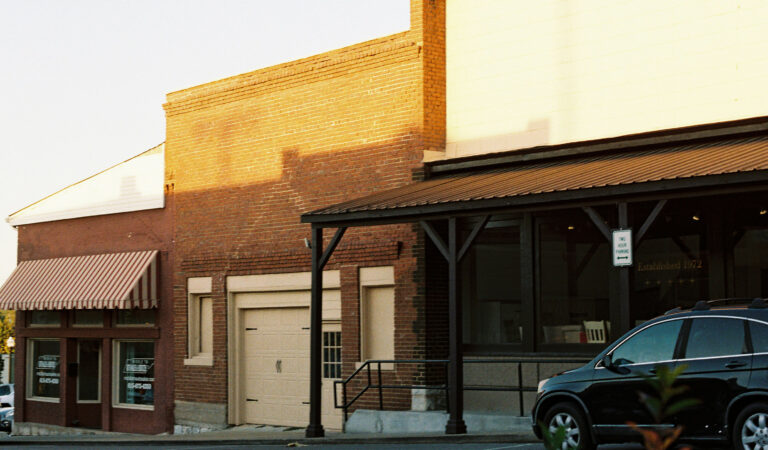
Interest in ACUs began to mount during the lockdown, when tens of millions of employees were furloughed or ordered to work from home. But several years earlier, Spokane, Wash., pursued a prescient, if limited, initiative: its “Activate Existing Neighborhood Commercial Structures” project. As a planner put it, the city once “enjoyed numerous small retail and commercial stores peppered throughout the neighborhoods, selling the small sundries and supplies needed by nearby residents.” Per Spokane’s University District, over the decades, most of the businesses were “abandoned, converted, or rezoned,” and thus blocked “from restoring [their] former commercial activity.” The same process, of course, afflicted most of urban America.
Spokane’s councilors authorized ACUs, “after approval of a conditional use permit,” for structures that “were originally legally built to accommodate a non-residential use” and existed before 2013. Firearms and cannabis purchases were verboten, as were sales “or leasing of motorized consumer vehicles.” Just under 100 properties met the permitting criteria, making the measure’s impact somewhat slight.
In 2021, Burien, Wash., a suburban city nestled in the Seattle area, adopted a Spokane-style measure to revive neighborhoods’ “legacy storefronts.” But the following year, Raleigh went big and broad. At the urging of councilman Jonathan Lambert-Melton, North Carolina’s second-largest city modified its Unified Development Ordinance to legalize ACUs “contained within or attached to a residential structure or contained within a legally conforming accessory structure or accessory dwelling unit.”
No longer were budding home-based entrepreneurs forced to obtain a special-use permit from the Board of Adjustment, a process The News & Observer reported was “a sometimes lengthy and expensive endeavor that often required hiring an attorney.” Raleigh limits sales from 7 am to 7 pm, and prohibits restaurants and outdoor seating. But it allows a wide range of businesses, from dry cleaners to “[c]lothing, textile, and apparel” manufacturers, music studios to the “[a]ssembly, design, repair or testing of clocks, computers, jewelry, musical instruments, and photographic or optical instruments.”
Berkeley, Calif., stepped up next. In January 2024, councilors tasked their city manager and planning commission to promulgate regulations that “permit neighborhood-scale retail uses in residential zones.” Unfortunately, after two and a half years, the rules have yet to emerge. In an interview with the Free Cities Center, former Council member Rigel Robinson noted that ACU legalization is “the current city council’s 8th highest priority, among 36 competing policy priorities.”
Also in 2024, as part of a major zoning overhaul, Pomona, Calif., approved the “secondary use of a single-unit home’s garage for the purpose of conducting a business enterprise that is operated by the homeowner.” Customer traffic is limited to 7 am to 10 pm, “deliveries by any commercial vehicle” cannot occur between 6 pm and 8 am, and no “equipment or process is permitted … that creates noise, vibration, glare, fumes, odors or electrical interference detectable to the normal senses, off the premises.”
Last year, city commissioners in Muskegon, Mich., unanimously approved ACUs, as did Seattle councilors, who signed off on “[f]ood processing and craft work,” “[g]eneral sales and services,” and restaurants in residential areas. In March, the Lone Star State’s capital city amended its Land Development code to create “a new land-use category for commercial establishments limited in size (maximum 200 square feet) that are accessory to a residential use on the same parcel.” The Austin Board of Realtors endorsed the revision: “Front Yard Businesses give everyday Austinites the opportunity to build wealth and explore entrepreneurial ventures without taking on the risk and expense of commercial space.” The measure’s “by-right administrative approval structure” reflected “the kind of permitting reform” the organization “has consistently championed.”
Three Republican lawmakers in New Hampshire believe the same way. During the 2026 legislative session, they sponsored an act “establishing accessory commercial units by right.” House Bill 1023 defined an ACU as “a subordinate commercial space” located “on the same lot as a principal residential or commercial use, either within the same structure or in a detached accessory structure” that is “clearly incidental and secondary to the principal use of the property,” and provides “neighborhood-scale goods or services that do not produce excessive noise, odor, vibration, traffic, or other adverse impacts on surrounding properties.”
New Hampshire Rep. Joe Sweeney’s sponsorship stemmed from the “idea of allowing people to unlock their own American Dreams and saying, ‘You know what? Maybe in Year Zero I might not have the revenue to start a business in a retail center in a strip mall, so I’m going to have to start smaller.’” He cited “those great American stories of people building companies in their garages or their basements” as inspiration. The New Hampshire Liberty Alliance, “a non-partisan coalition working to increase individual freedom,” backed his bill.
While the Grantie State legislation did not become law — the same fate befell similar attempts in Connecticut and Washington in 2025 — from the Pacific Coast to New England to the Heartland, ACUs are drawing interest, and fans.
Won’t that greenlight the Lopezes to plop a Costco down in their side yard? Stand aside, as the Tanakas expand their freestanding garage into a Dollar Tree. Or the Andersons replace their swimming pool with a In-N-Out Burger. As ACU momentum builds, look for NIMBYs to stay on brand, and offer unhinged, and inaccurate, worst-case scenarios. But given its embrace by both the urbanist left and pro-capitalism right, the remote-work transition, and a rapidly aging population looking for amenities close to home, neighborhood commerce might evolve from a curiosity to an inevitability.