
Can 3D printers help solve the housing-affordability crisis?
by Kerry Jackson | March 27, 2026
The best thinkers have been unable to solve California’s housing crisis, not because their ideas haven’t had merit, but due to policymakers’ resistance to reasonable reform. Technology, though, might soon override the obstructionists.
A recent study published by the University of California, Berkeley Terner Center for Housing Innovation outlines “Potential Pathways to Scale Innovative Construction Methods in California.” Among the possibilities are building code reform, reducing “financial risk and liability to encourage industry growth” and boosting “long-term industry certainty by developing a strong workforce pipeline.”
But the one that’s most intriguing could replace the conventional timber-raising model: technology that prints homes on-site.
Three-dimensional home printing uses industrial-size printers that pour concrete on based on a digital blueprint. Other materials that can be used, says Parametric Architecture, include “polymers, sand, resins, and even sustainable alternatives like hempcrete, bio-resins, and wood composites.” Even sawmill waste can be converted to useful material.
Three-dimensional (3D) home printing is mentioned only four times in the Berkeley study’s 41 pages. It’s categorized as a subset of “industrialized construction,” which includes “a broad spectrum of practices that apply the ideas and methods from the manufacturing industry to housing design and construction.”
The paucity of references to 3D home printing shouldn’t be taken as an indicator that it’s of questionable value. It is, in the opinion of one industry player, “changing the way the world is built.” That’s the claim of a company that builds concrete 3D homes, so it has a financial interest in promoting its product. But media reports are often just as rosy.
“If you’re looking for a housing option that’s green, clean, efficient and won’t cost an arm and a leg to build, the future is almost here,” says U.S. News & World Report.
WTOP radio in Washington, D.C., swears that 3D technology “is reinventing homebuilding.”
“3D-printing technology is revolutionizing the future of homebuilding,” according to USA Today.
The U.S. Sun, in a story about 3D homes being built in Yuba County, Calif., has called them “the houses of tomorrow.”
It’s understandable that the process is creating some excitement. Emerging technology is often inspiring because it introduces previously unimagined ideas. But 3D home printing is also promising at ground level.
The affordability of 3D homes can’t possibly be overstated in California, where a housing crunch has dragged on for decades. The median price home in the state is $818,000, the most expensive in the country outside of lobbyist-rich Washington, D.C. The first home finished — in a mere 24 days — in Yuba County sold for $280,000. Estimates in savings tend to be in the 30% to 35% range.
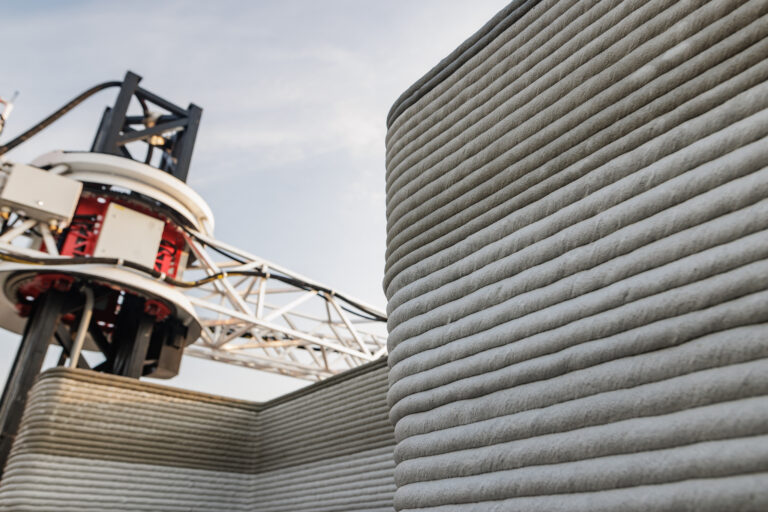
One of the factors that reduces cost is the shorter construction timetable. A 3D unit can be printed in 24 hours, at which point electricians, plumbers and door-and-window crews can begin their work to finish the house. COBOD International, a self-described “world leader” in 3D construction printing solutions — which insists that the printers will eventually be referred to as “multi-functional construction robots” — says that 3D homes can be built 20 times faster than traditional housing.
Time is important when California has an overwhelming housing deficit. The nonpartisan Legislative Analyst’s Office said in 2015 the state needs to build “many as 100,000 additional units” a year beyond what then was an average of 140,000 “to seriously mitigate its problems with housing affordability.” A year later, McKinsey & Company said the state needed 3.5 million new units by 2025. Despite the warnings, an average of only about 111,000 new units were built a year from 2015 to 2022. The pace fell “to just under 100,000” in 2024. Over the period from 2015 to 2024, the total was hardly more than 1 million.
Printed homes should have the support of environmental activists, who are arguably the greatest obstacle to homebuilding in California. They cut waste and lower energy consumption. Those who fear carbon dioxide emissions will be happy to learn that a Texas company has produced “a carbon-neutral material that serves as a stronger alternative to traditional cement,” says 3DPrinting.com, an industry website, and “has the potential to reduce construction’s CO2 emissions by a staggering 93%.”
Homes aren’t the only structures that can be made from 3D printing. As the technology develops and larger printers come online, it can be used to inexpensively produce public facilities, such as schools and government complexes, as well as commercial sites.
Three-dimensional printed homes aren’t the answer to California’s housing troubles, but they are an answer. Their contribution is likely to depend a great deal on government regulation, which has not yet caught up with the industry. Given that California is a regulator’s paradise, it won’t be easy for them to keep their hands off of this innovative process. Some adult supervision from elected officials would be helpful. And then we’d see exactly who in Sacramento is making a good-faith effort to advance home construction.
Kerry Jackson is the William Clement Fellow in California Reform at the Pacific Research Institute.