

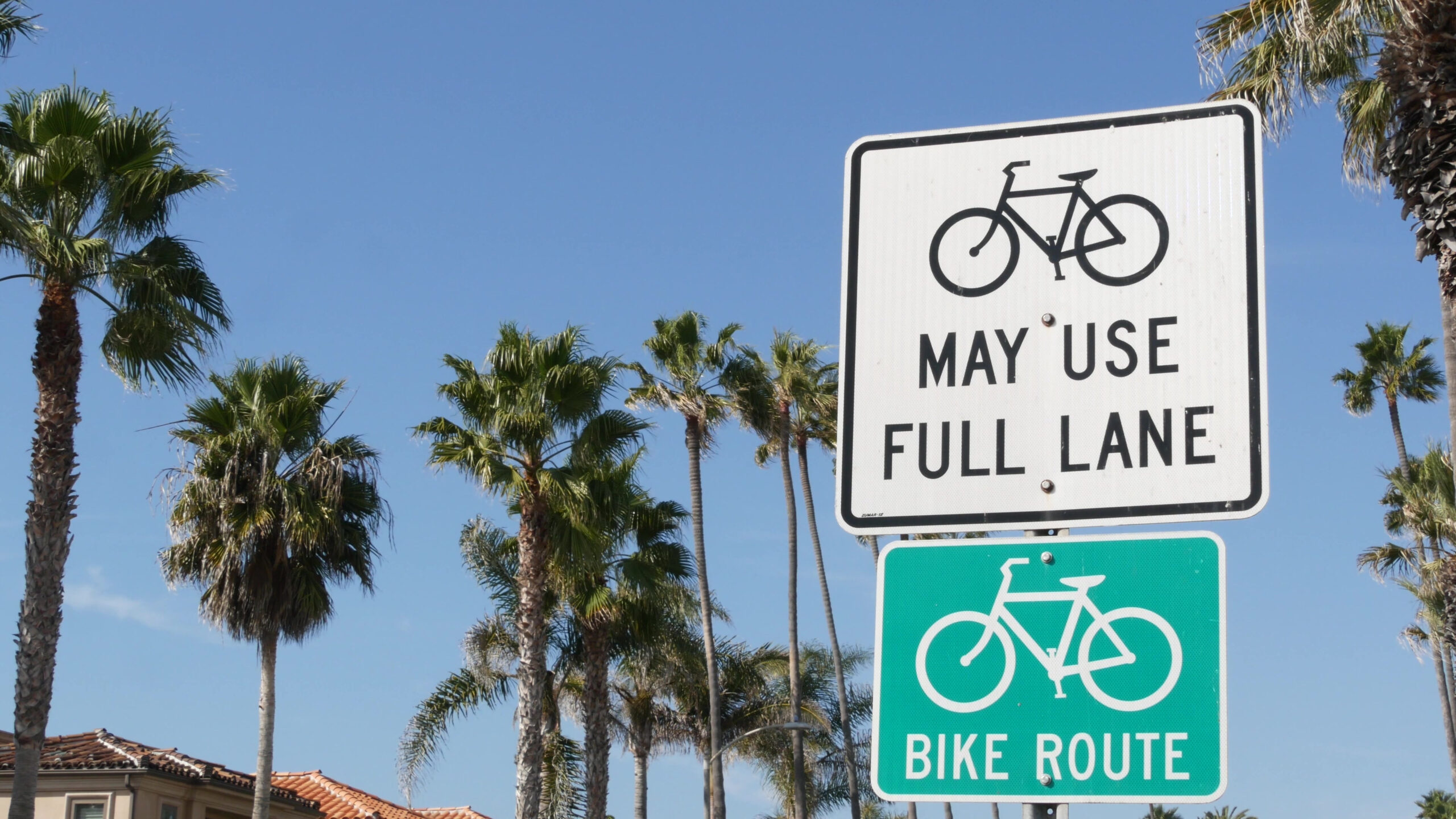
The “Week Without Driving” campaign took place nationwide in October to reduce pollution, lower carbon emissions and break Americans’ dependence on automobiles. Cities including Santa Cruz and Alameda, Calif., encouraged residents to give the car-free lifestyle a try and opt for public transportation or bicycles instead. That’s fine enough, but absolutely no one believes such events will have the slightest impact on the Earth’s climate.
Likewise, the California “Climate Action Counts” campaign launched last year urged residents to take a pledge to compost more and “green their ride” by biking or walking. These are among the countless government-sponsored community outreach programs in California and across the world promoting climate action by encouraging people to change their lifestyles.
While such programs have a charming earnestness about them and are mostly inoffensive, they raise questions about their effectiveness. Let’s be real: Even people who are convinced that man-made climate change is an unfolding disaster understand the limits of taking extra bike rides and eating fewer cheeseburgers. In their heart of hearts, they also surely know that the widespread lifestyle changes they envision will take more than government regulation.
For starters, getting people to change how they get around when those changes represent daily sacrifices is a losing battle — as demonstrated by research and common sense. Widespread behavioral changes are notoriously difficult to achieve unless people see an immediate benefit to the change. Even when people want to change how they live, they often struggle to make such changes a permanent fixture of their lives. Just think about people’s difficulties with dieting or sticking with their New Year’s resolutions for more than a few days.
Unless the public perceives these changes as either immediately necessary or an upgrade to their quality of life, we can only expect community outreach campaigns to have limited impact. The research concurs. When people are informed of dangers like climate change, they typically want to do better. Around 80% of people worldwide want their country to do more about climate change and approximately 38% of Americans say they’re likely to seriously consider an EV as their next car purchase. That’s encouraging news.
But these attitudes change when the rubber meets the road. A 2021 survey found that only about 7% to 13% of Americans are willing to do “a lot more” such as by speaking to family and friends about climate change or taking political action. A European survey across seven countries also found broad support for government action. But the more that a proposal required lifestyle changes — such as switching to public transportation or cutting out meat consumption — the less likely respondents were to support it. Again, this should be obvious given human nature.
The upshot is that while people want their governments to do more about climate change, they are unwilling to do much more themselves, either because they see themselves already sacrificing enough or they are skeptical about how effective their efforts would be.
As a result, it’s clear that the best way to address climate change is by making it easier to live in a climate-friendly manner. Governments are mainly about regulation, but this is where the private sector comes in. Companies have a vested interest in making their products and services appealing. For instance, electric vehicle sales have stagnated, but Americans aren’t going to buy more of them because of a government hectoring campaign. But they will buy more if EV prices come down, batteries have longer range, and it becomes easier and quicker to charge them. The best policy approach is to make it easier for people to do what they believe to be the right thing.
There certainly is a role for government in this process, mainly in removing obstacles to private innovation. Federal and local governments can expedite permitting for charging stations (California’s Plug-in Electric Vehicle Permitting Scorecard is a step in the right direction) and allowing new EV competitors to enter the American market.
Currently, the Chinese EV company BYD is the largest EV manufacturer in the world. The company offers EV models for as low as $8,000 in the Chinese market, but they are virtually banned for sale in the United States because of tariffs and Chinese automotive software prohibitions (software used for autonomous driving and connection to the internet).
Protectionist policies like these remove the natural pressures that U.S.-based manufacturers would face if they had to compete with lower-cost entrants. Competition would reduce costs for consumers and could jumpstart a rapid move toward EV adoption. American national security concerns with Chinese connected-car software are legitimate, but would not be difficult to ameliorate with additional technical scrutiny and oversight. China already takes such measures with Tesla vehicles and data centers in their territory.
Government officials have also cited the unfairness of making American manufacturers compete with the CCP-subsidized Chinese manufacturers. This is also relatively easy to address as the European Union has done with anti-subsidy tariffs. If the American government isn’t serious enough about climate change to reduce trade barriers to affordable EV technologies, then it shouldn’t be surprised that individual Americans aren’t concerned enough to change their lifestyles.
People make lifestyle decisions based on what is available, reliable and affordable. Living a low-carbon life will become the natural default if public transportation is excellent, EV charging stations are ubiquitous, and if there are cheap EVs with excellent range and fast charging times. American policy makers should focus on achieving those goals rather than sponsoring pointless anti-driving campaigns that are little more than virtue signaling.
Rafael Perez is a columnist for the Southern California News Group. He is a doctoral candidate in philosophy at the University of Rochester.