

That transformation also raises an important question as Americans reconsider our nation’s role in the world.
In 1984, Sarajevo welcomed the world as host of the Winter Olympics. Back then the city represented a modern, multicultural Yugoslavia and an optimistic future. John Denver was there as part of the US media coverage singing his iconic song “Country Roads” traveling around Yugoslavia as a cultural ambassador.
Fewer than ten years later, Yugoslavia became synonymous with siege warfare, ethnic cleansing, and one of Europe’s bloodiest conflicts since the Second World War. It would be a while before athletes from what became the “former” Yugoslavia would hear “Country Roads” again.
History has a way of humbling our assumptions.
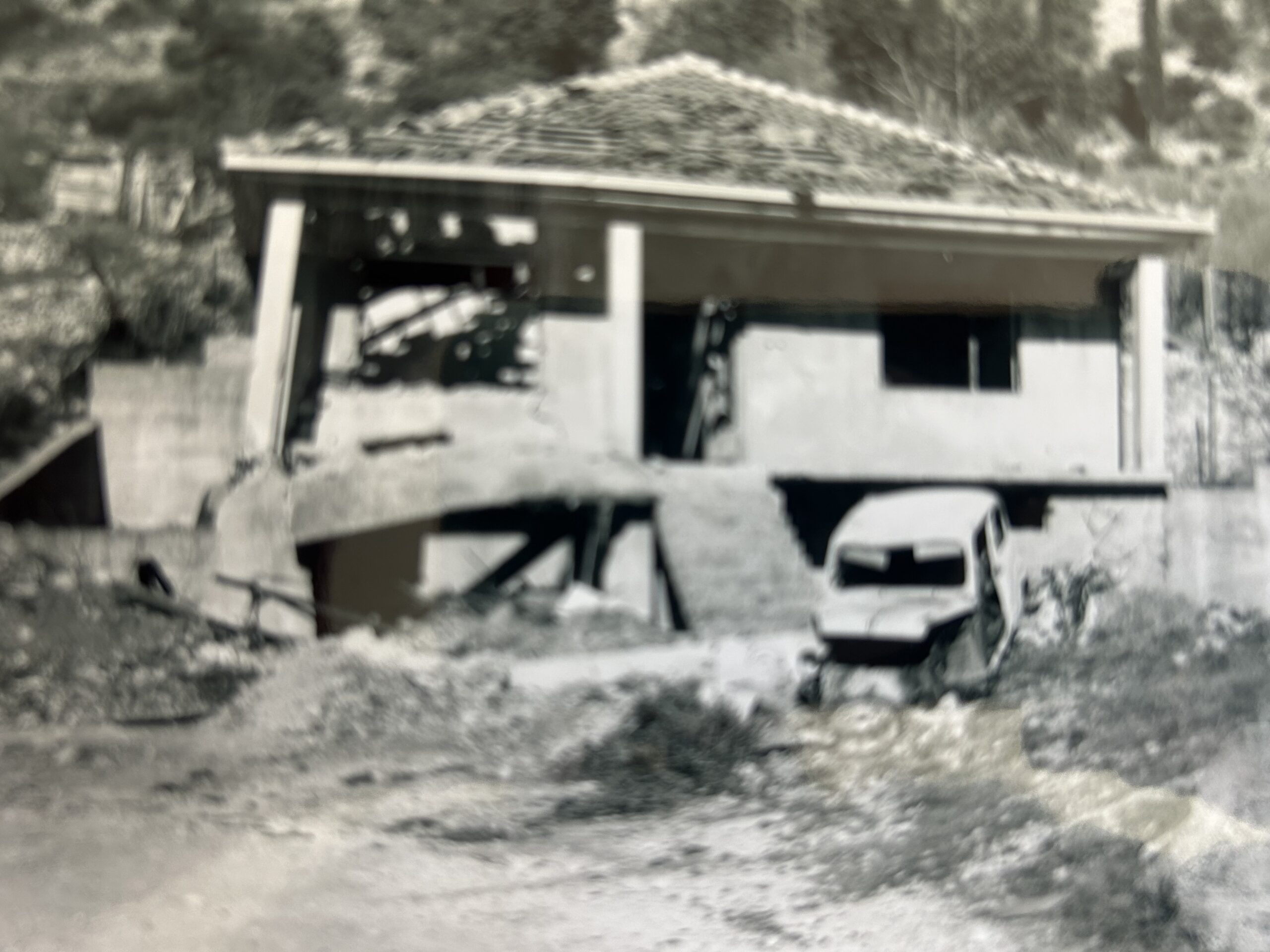
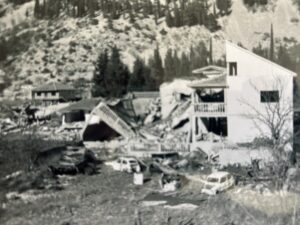
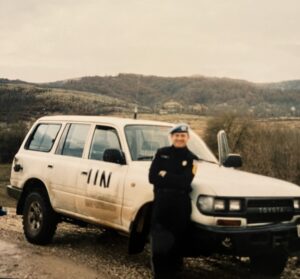 I arrived in Stolac, Bosnia in 1997 as part of the US contingent of police officers serving with the United Nations International Police Task Force. Prior to the war Stolac was one of the most important historical sites in the Balkans with an ancient history reflecting the many cultures that left their mark in its buildings. But the Stolac I saw in 1997 was 75 percent destroyed, including homes, libraries, places of worship, and museums. The human toll was far worse. From a pre-war population of 6000 Bosniaks, only a small handful remained in Stolac living in a small UN sponsored resettlement area. The rest had become refugees in a process known as ethnic cleansing – a policy all three warring entities used to solidify their political dominance.
Brutal war crimes were endemic throughout the country.
When it was over, approximately 100,000 soldiers and civilians had been killed and 2 million refugees displaced throughout the country.
The Dayton Agreement ended the war in 1995 but real peace comes slower and forces its own reckoning as grievances, however legitimate, must be put aside.
One of the tasks confronting the international community was to help transform policing from an instrument of ethnic power into a professional institution governed by the rule of law. Minority officers returned to integrated police services, professional standards replaced political loyalty, and accountability replaced arbitrary authority.
The objective was simple but profound: to demonstrate that the badge belonged to the law rather than to an ethnic group or political faction.
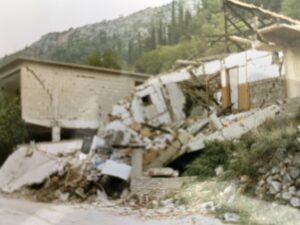 Each morning, I walked to the IPTF station and looked across the street at what remained of the Stolac Hospital – once the recipient of national acclaim for its treatment of muscular-skeletal diseases. During the war it had become a prison and torture chamber. It served as a daily reminder of how quickly institutions can lose their purpose when the rule of law gives way to fear, politics, or ethnic division.
A hospital can become a prison, a police force can become an instrument of persecution, a court can become a tool of injustice, and an army established to defend a nation can be turned against the very citizens it was created to protect.
Institutions do not possess legitimacy on their own. They derive it from the principles that govern them and the people entrusted to uphold them. That is why rebuilding Bosnia required far more than reconstructing buildings or repairing roads. It required rebuilding institutions worthy of public trust.
The mission was often described as police reform. In reality, it was institution building. The Dayton Peace Agreement ended the fighting, but peace agreements don’t create trust. Bosniaks, Croats, and Serbs remained deeply divided by ethnicity, religion, history, and the trauma of recent violence.
I learned that the rule of law is the infrastructure of democracy.
For many Americans, the words foreign intervention immediately evoke Iraq and Afghanistan. Those wars cost thousands of American lives, consumed enormous national resources, and left many questioning whether the United States should continue assuming an active leadership role in international disputes.
 My years in policing taught me something that applies to foreign policy. The greatest successes are often the ones that never become headlines. The best police work is measured not only by crimes solved, but by crimes prevented. Likewise, successful diplomacy is often measured not only by wars fought, but by wars that never happened or resume.
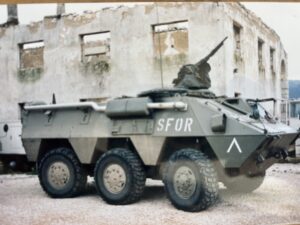
Bosnia rarely dominates international headlines today precisely because, despite continuing political tensions, the war has not returned. Having seen the aftermath of that conflict firsthand, I have come to appreciate that quiet success is easy to overlook. Yet it was neither automatic nor inevitable, nor was it America’s achievement alone.
The success of the post-Dayton mission rested on complementary strengths. The United States provided indispensable political and diplomatic leadership, NATO established the security conditions that made civilian reconstruction and refugee resettlement possible, the United Nations helped rebuild policing and civilian governance, the European Union became the region’s long-term political and economic anchor, and the OSCE strengthened democratic institutions through election observation and institutional development. Most importantly, the people of Bosnia and Herzegovina themselves chose, day after day, to resolve political disagreements through institutions rather than renewed violence.
Together, those efforts demonstrated something often overlooked in today’s foreign policy debates: American leadership does not always require American occupation.
The Western Balkans remain a fragile political experiment. Republika Srpska continues challenging Bosnia’s constitutional framework. Kosovo and Serbia remain divided. Corruption, organized crime, and outside influence continue testing democratic institutions. Peace should never be mistaken for permanence. Yet those realities should not obscure a larger truth. Three decades after Dayton, one of Europe’s most historically complex regions continues to resolve its gravest disputes through politics rather than war. That is not perfection, but compared with the alternative, it represents extraordinary progress.
Bosnia taught me that American leadership is most effective when it helps others build durable institutions rather than permanent dependencies.
History offers no guarantees. Sarajevo reminds us how quickly peace can collapse, while Bosnia’s appearance on the World Cup stage reminds us that history can also move in a better direction.
Three decades after Dayton, the Western Balkans remain an unfinished democratic experiment. Having watched one small part of that reconstruction firsthand.
I remain convinced that its future will depend first upon the people of the region, but also upon whether the United States and its allies continue to lead the partnerships that have already demonstrated what patient, principled leadership can achieve.
Steve Smith is a former United Nations police commander and OSCE election observer who has worked in Bosnia and Herzegovina, Albania, North Macedonia, Kazakhstan, and Kyrgyzstan.