

Another fundamental problem is these comparisons rely on U.S. medicines’ gross (or list) price. But list prices do not account for the complex U.S. drug supply chain, where manufacturers receive only a portion of the gross price and intermediaries, such as pharmacy benefit managers (PBMs), receive a disproportionate share.
As PRI previously highlighted in 2025, PBM rebates and fees – which are unique to the U.S. – exceeded international prescription medicine prices by more than 900 percent for some medicines. This trend persists today.
The table below compares the rebates and fees PBMs receive for 10 commonly used brand medicines to prices in 11 OECD countries. The comparisons are striking – these fees and rebates charged by PBMs are typically six to seven times larger than the prices in other countries and can be more than thirty times.
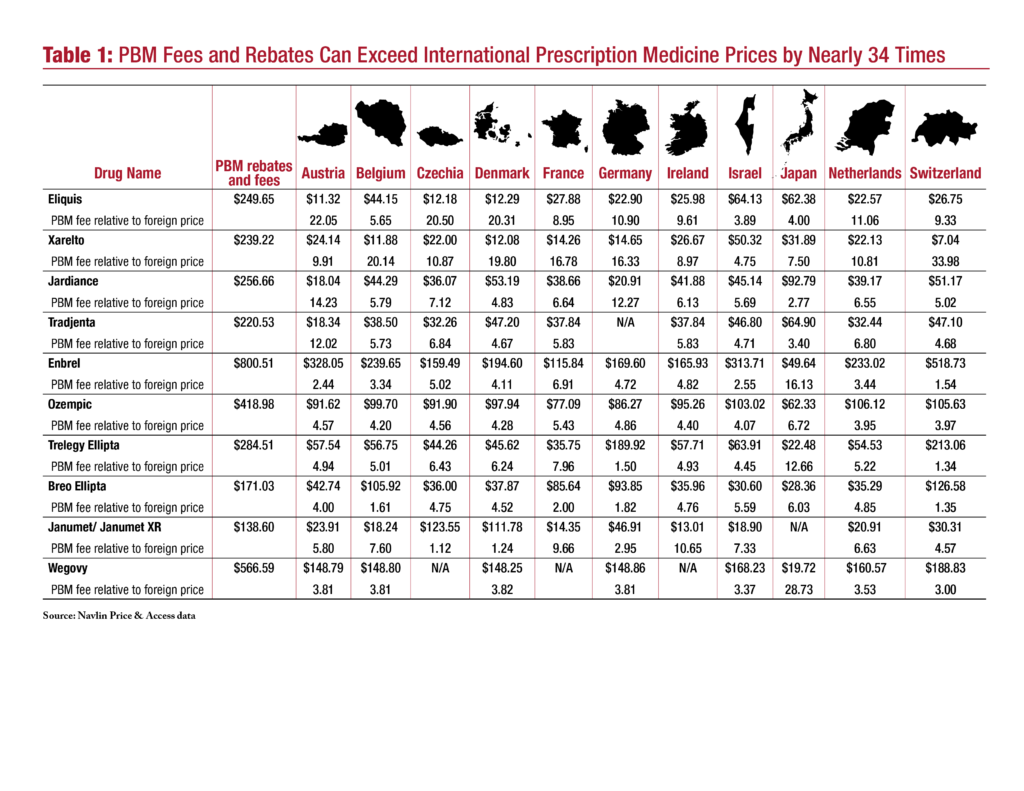
For example, PBMs received an estimated $567 for a 30-day supply of Wegovy, which is nearly three times more than the price of the medicine in Austria, Belgium, Denmark, Germany, Israel, the Netherlands, and Switzerland. For a 30-day supply of Eliquis, PBMs received an estimated $250, more than twenty times the price in Austria, Czechia, and Denmark. These data comparisons demonstrate that PBM fees and rebates are still unnecessarily inflating U.S. drug prices.
Because large PBM fees and rebates are unique to the U.S., list prices paint an inaccurate picture of the price discrepancies between U.S. and international markets. More problematically, these comparisons encourage policies that create drug shortages and access issues while reducing the overall quality of care.
Garbage data in, garbage healthcare out.
Dr. Wayne Winegarden is the director of the Center for Medical Economics and Innovation at the Pacific Research Institute.