
Newsom’s Final Budget Defers the Difficult Budget Decisions to California’s Next Governor
Wayne Winegarden
July 2026
The FY2026-27 Budget Basics
Gov. Newsom has signed the FY2026-27 budget – Newsom’s final one as governor. He claims the budget “prioritizes fiscal restraint” and promotes “long-term sustainability,” but the numbers tell a different story.
According to the agreement, the state will spend $351.7 billion in the 2026-27 fiscal year, which is nearly $27,000 per household. Overall state spending will increase 10 percent compared to last year and will be up over 70 percent since Newsom took office.
Housing and Homelessness
These topline figures don’t account for all the potential new spending. Newsom is also asking voters to support $11.25 billion in bonds to support the construction of affordable housing. The costs for financing these bonds could be nearly $800 million a year for the next 30 years, assuming a standard 30-year bond with a 5.5% interest rate – the bill mandates that the maturity date for any bond authorized by this proposal cannot exceed 35 years.
Of course, it is important for housing to be affordable and to help the homeless. The state already allocates billions of dollars toward these efforts, including the additional $900 million allocation to homelessness and housing assistance included in this budget. When it comes to housing and homelessness, the problem is not insufficient spending. It is the ineffectiveness of the state’s programs. Throwing more money at ineffective programs is not the answer.
KEY TAKEAWAYS
- The newly passed FY2026-27 budget will increase spending 10 percent year-over-year. Despite claims of fiscal prudence, this budget is fiscally irresponsible.
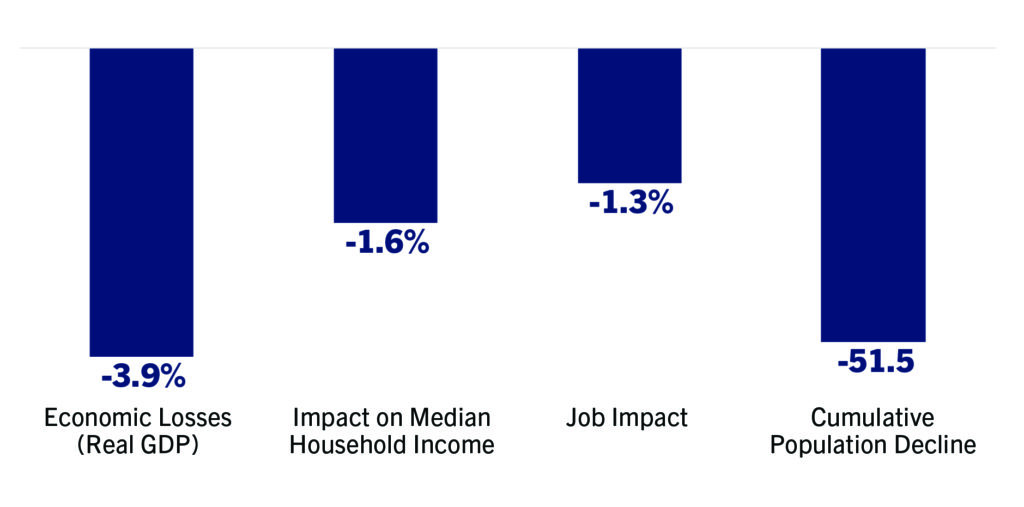
- The budget raises corporate taxes by $5 billion, which will worsen the state’s economic competitiveness. Based on PRI’s Economic and Tax model, over five years, these proposals will slow the economic expansion by nearly 4 percent, reduce the growth in the average income by more than $1,900, and reduce job growth by more than 260,000.
- Surging income tax revenues from high income taxpayers are propping up the state budget, but these revenues will eventually stall. Including the rising pension costs and structural weaknesses looming over the budget, California faces a massive fiscal crisis that policymakers will have to eventually address.
Expanding California’s Rainy Day Fund
Other seemingly fiscally responsible actions are just as suspect. Take the proposal asking voters to double the size of the rainy day fund while exempting all deposits from counting against the Gann Limit. The Gann Limit is the voter passed initiative that sets a constraint on government spending. As per the text of the Gann Limit, when its spending boundaries are breached, the excess revenues are supposed to be returned to taxpayers, thus ensuring that taxes are affordable.
The combination of a larger rainy day fund and exempting all funds from counting against the spending cap all but ensures that the Gann Limits will never be breached. Future politicians will then be empowered to spend those funds that should have been returned to taxpayers. Thus, rather than an effective budget stabilizer, the proposal further reduces the already waning constraints on government spending.
The budget also plays games. For instance, it shifts around education expenditures that reduces total spending today (helping balance the current budget) but creates an obligation to repay those funds tomorrow (making it more difficult to balance future budgets).
Budget Contains Several Major Tax Increases
Then there are the tax increases. The budget imposes $5 billion in new taxes including extending a tax on healthcare insurers, capping corporate tax credits that will disproportionately harm key economic drivers for the state that include the life sciences and tech industries, and levying a new sales tax on certain software purchases.
Based on PRI’s Economic and Tax Model, these provisions could shrink the state’s economic growth by nearly 4 percent, reduce the growth in the average household income by more than $1,900, reduce the growth in jobs by more than 260,000, and accelerate the exodus away from the state by more than 50,000 people.
5-Year Economic Impact Compared to Baseline
(population change in thousands)
The Risks of Future Budget Deficits Are Worse Than They Appear
Newsom claims that this new spending is fiscally responsible because the FY2026-27 budget is not in deficit, but this is a state constitutional requirement. Doing the requirements of your job is not an exceptional achievement.
He also crows that there will be no deficit next year. But this claim is based, in part, on surging income tax revenues from the rich – the top 1 percent of income earners provide around 50 percent of the state’s total income tax revenues. This year, surging AI stock valuations have inflated state income tax revenues. These revenue surges represent the sugar-high period of the state’s notoriously volatile tax system.
Like all sugar highs, the revenue crash eventually comes, often sooner than politicians plan. Should there be a speculative AI bubble, or AI valuations simply plateau, the projected future income tax revenue growth will disappoint causing a huge budget deficit that the next governor will need to solve.
Conclusion: The Seeds of California’s Next Budget Crisis Have Been Planted
As we have been documenting in our Spending Watch analyses, there is an impending fiscal cliff that is clear to anyone willing to see it. For the honor of paying the 8th highest per capita tax burden in the country and enduring one of the least competitive tax systems (the 3rd worst), Californians receive terrible public services. Our schools underperform; our roads are the second worst in the country; and nearly one-quarter of the nation’s homeless population live in California.
Longer-term, the prospects become bleaker. Even CalPERS admits, that the pension fund is only 79 percent funded as of the end of FY2025 even though investment returns were a strong 11.6 percent. This creates a $265 billion budget hole, which will worsen should the market underperform.
The time to address the state’s fundamental imbalances was yesterday. Working against these solutions are the same fundamental problems. First, as Newsom’s last budget amply demonstrates, state leaders believe that more state spending is the solution to every problem – especially those created by previous state policies or programs.
Second, California’s budget process is riddled with voter-approved spending requirements, constitutional formulas, and federal mandates that reduce the state’s ability to effectively budget.
The voter approved Prop 98, for instance, mandates that a pre-determined portion of the General Fund revenues – around 40% – must be dedicated toward K – 14 programs. Prop 55, which increased personal income tax rates, also mandates those revenues be spent on K – 12 and community college programs. Voters will be asked to make these taxes permanent in the November 2026 election.
The bullet train boondoggle gets its guaranteed appropriation from the cap-and-trade fund. Even Medi-Cal spending is biased upward. Should the state try to economize on its healthcare spending, the resulting loss in matching federal revenues would create even larger holes in the budget.
Cutting pork programs is also problematic as every seemingly wasteful program has advocates. The benefits from these programs are concentrated in these groups of course. Because the costs for each individual program are relatively small and dispersed over millions of taxpayers, eliminating waste is much harder than identifying it.
Overcoming these obstacles is exceptionally hard. The best way to avoid a troubling fate is to change course well before the budget crashes into economic reality. The latest budget does not remotely recognize these problems which is why, the FY2026-27 budget is another fiscal failure.