

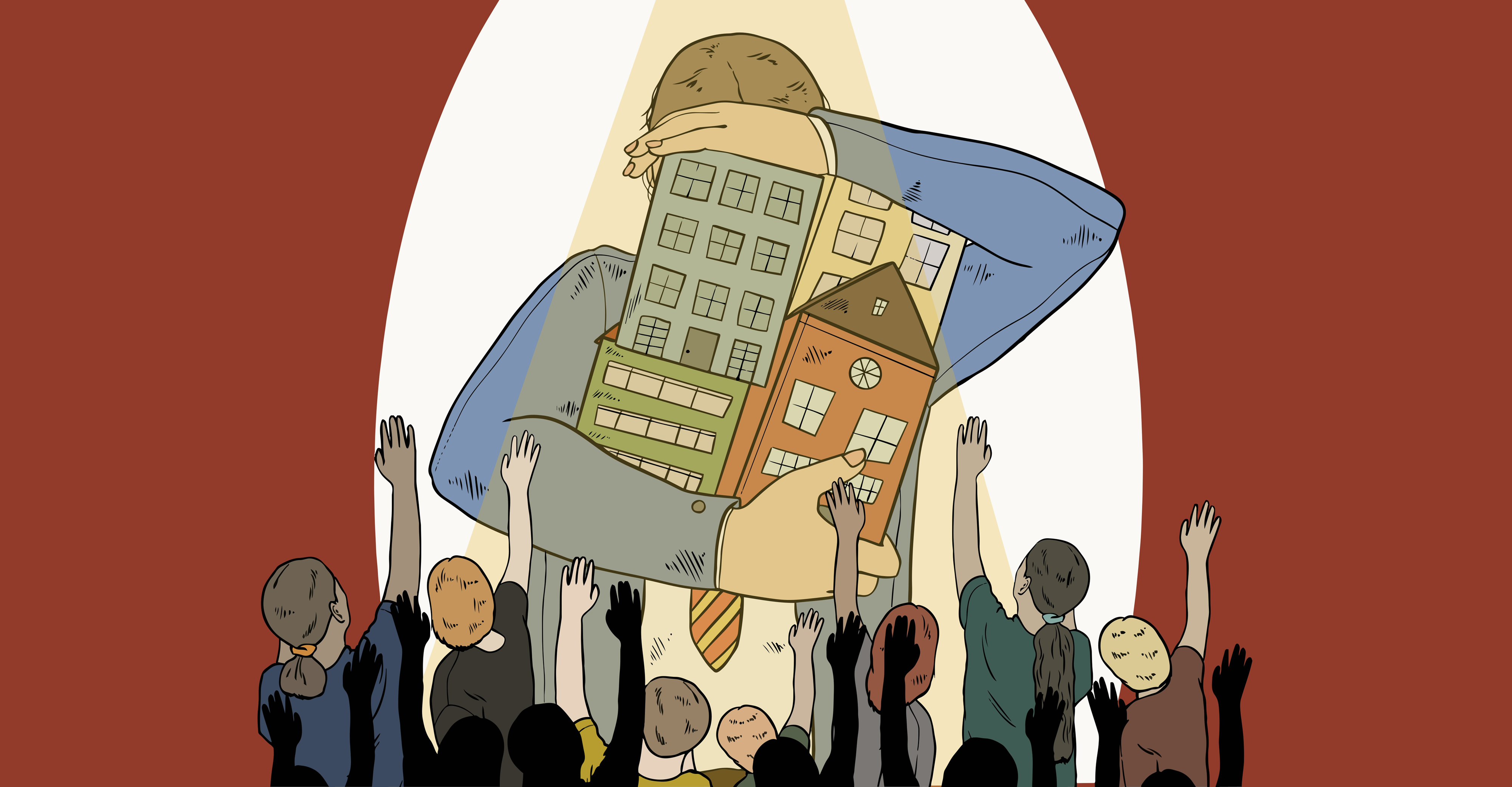
This is the sort of behavior that is making it nearly impossible for California to ever close its housing gap, which, according to Gov. Gavin Newsom’s 2017 campaign material was a 3.5 million unit deficit that needed to be closed by 2025, which turned out to be his next-to-last year in the governor’s office. Despite Newsom’s assurances that he would lead the effort to wipe out the shortfall, only 677,000 new units have been built in the last six years.
While Newsom can’t brag that he kept his promise, it’s unfair to suggest that he’s fully at fault. Some of the blame has to be laid on local governments, such as affluent Menlo Park demanded that in return for permission to build, Mircea Voskerician had to hand over a $127,400 “recreation in-lieu” fee. He did so. But under protest.
The Pacific Legal Foundation, which is representing Voskerician in his court challenge, says “permit fees must be directly related to the impact of the project.” In Voskerician’s case, Menlo Park demanded money for city parks, called a “Quimby fee,” that are neither in need of improvement nor have any connection to his project. The city didn’t even bother to make an individualized determination that the project would adversely impact its parks and recreation facilities, it simply imposed the fee.
Even if tried, it couldn’t possibly make that determination, says the PLF. The city already has about 6.5 acres of parkland per 1,000 residents, far more than neighbors Palo Alto (2.6 acres) and East Palo Alto (1 acre), and quite a bit more than the 4 acres per 1,000 that the National Recreation and Park Association recommends.
What Menlo Park has done to Voskerician violates the U.S. Constitution’s prohibition of takings, federal law and Senate Bill 9 (2021), which allows “the subdivision of a parcel in a single-family zone into two parcels” under the ministerial approval that he sought. The city was specifically told in 2024 by the state Department of Housing and Community Development that it could not under SB 9 collect recreation fees as a condition of approval on an application to split a lot.
Yet it did it anyway.
Menlo Park’s impact fee is a clear case of a government shakedown, an act of coercion in which the private-sector can play only when it pays.
But it is also something else. Quimby fees are a sneaky way for local governments to shut down unwanted development. If fees are high enough, they create a strong disincentive to build.
Either way, the government wins. If it doesn’t stop or slow development, it pockets a large sum of money that it can use to soothe the frustrations of residents who didn’t want the project because they fear it might change a neighborhood’s character or lead to an entire town losing its painstakingly crafted vibe.
What the impact fee most definitely is not a path to increased homebuilding. There are higher hurdles to housing construction, in particular the California Environmental Quality Act, which has been weaponized for decades. But unnecessary fees at the local level are harmful, as well. It’s the protective housing policy of the 1970s and 1980s, which isn’t at all suited for the demand of the 2000s.
Kerry Jackson is the William Clement Fellow in California Reform at the Pacific Research Institute.