

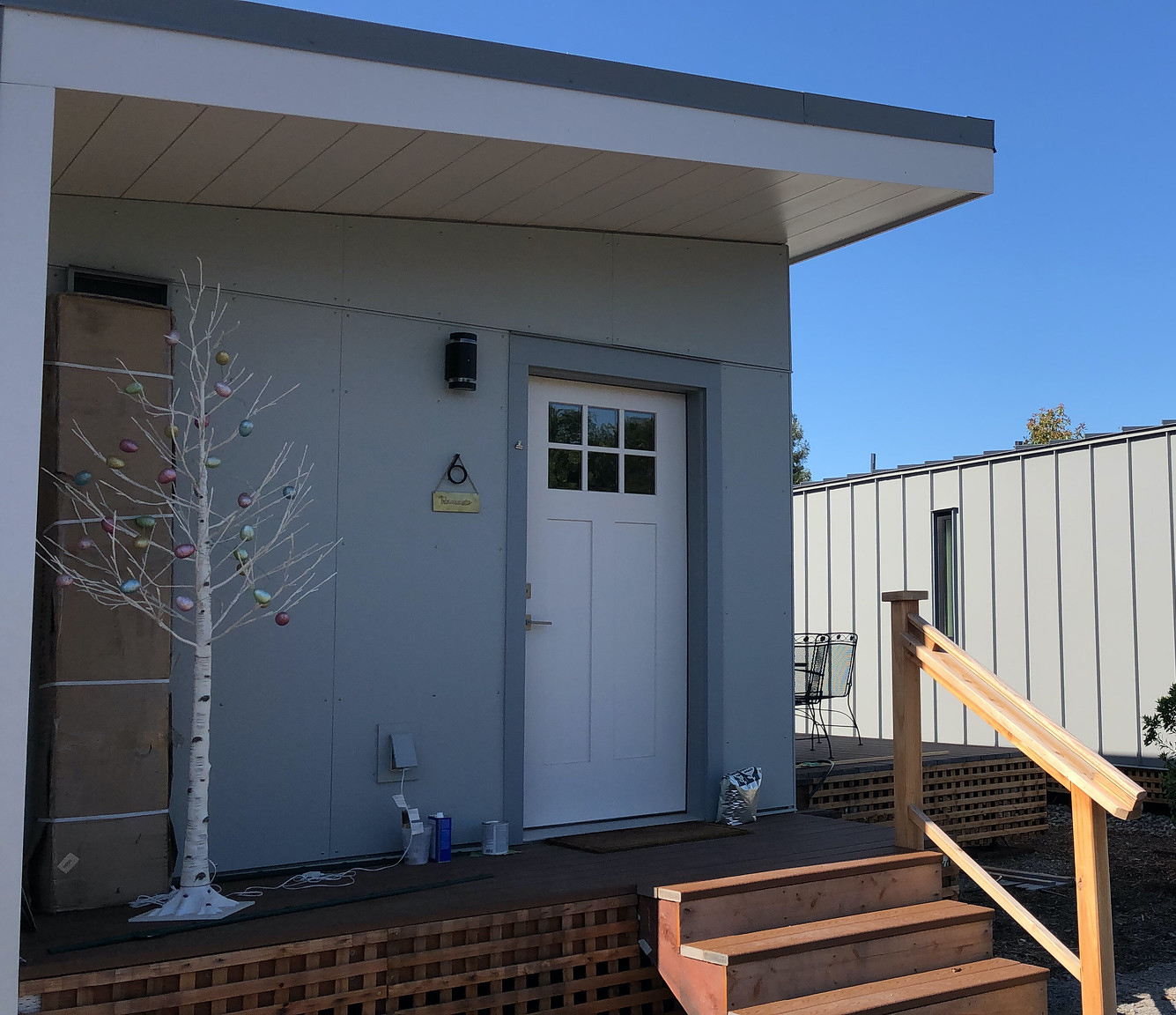
Last month, the city’s planning commission unanimously advanced the “Expanding Housing Options” proposal to update the city’s zoning code for R-1 districts (single-family neighborhoods). In addition to simplifying the zoning code, the proposal would legalize a range of “small lot dwellings” — including single-family homes, duplexes, triplexes, fourplexes and townhomes of up to four units on lots as small as 2,000 square feet.
As noted by Building Salt Lake, these “small lot dwellings” will be a “permitted use, meaning no planning petition or public hearing would be required if the proposal meets the updated zoning code.” The relaxed land-use rules, plus the exemption from drawn out public vetting, could help add to the housing mix of the city.
“The text amendment gives property owners in these districts more options for how they use their property, making it possible to build more types of housing and removing restrictive zoning standards that limit what can currently be built,” the city’s planning commission reported.
The proposal comes as Salt Lake City, like most major cities, works to solve a housing crunch that prices out young families from homeownership and leaves many city residents rent burdened. “Despite a housing construction boom, housing prices suggest a shortage of housing supply overall, but especially housing that is deeply affordable (affordable to renters earning 30% of area median income or less), with demand for housing outpacing supply,” the city reported in 2023.
The city, to its credit, has pursued and adopted a number of housing reforms in recent years through its Housing SLC plan. But with this proposal, the city is opening the door to what would be the first major R-1 zoning update in over 30 years, according to the planning commission.
Public comments submitted to the planning commission represented the range of views one would expect from such a proposal. One resident argued that the plan didn’t guarantee that new housing built under its relaxed rules would be low-income housing. Another warned that the proposal was a scheme to help developers and “does nothing to solve the affordable housing crisis, and ruins these neighborhoods. For what? Greed? Ask yourselves what is really behind these proposed zoning changes.”
Assuming housing affordability is the goal, what these sorts of arguments miss is the value of adding supply of any type of housing that’s in demand. Housing built to be affordable for higher-income renters and buyers might not directly help lower-income renters and buyers, but they serve a need that, in turn, means those same higher-income renters and buyers aren’t competing with lower-income people for finite housing. Supply is essential to achieving housing affordability. And, yes, of course developers are the ones who are going to get things built.
In addition, the city’s planning commission points out that the sort of small lot housing the proposal aims to facilitate is often going to be cheaper, and even much cheaper, than a standard-sized home. That’s why the commission explains that “being able to build homes that are significantly less expensive to purchase is necessary to keep households with children in the city and in homes that they can afford without any additional subsidy.”
Echoing this is a coalition of community groups, homebuilders and Realtors who stressed their support for the zoning reform. “By distributing modest housing growth across more neighborhoods, the city can reduce pressure on a limited number of areas and promote more equitable access to high-opportunity communities,” they wrote.
As noted, the planning commission ultimately approved the plan unanimously, though one commissioner proposed conditioning the relaxed rules on at least one of the units on impacted lots to be owner-occupied. “The commissioner ultimately sided with what was recommended by city planning staff, agreeing that adjustments may be made with time if it is passed by city leaders,” reported local outlet KSL.
However, the Tribune reported that, “Property owners taking advantage of the housing incentives — if the new rules are ultimately approved — would have to live on-site, according to a straw poll by the City Council.”
The plan still has to be taken up by the Salt Lake City Council, but the changes will be on the docket before public hearings in mid-November. Many of the same sorts of anti-developer arguments are sure to surface during public comment, as are the usual complaints about allowing more housing to get built.
Complaints about neighborhood impacts certainly should be acknowledged and dealt with — but it’s not that challenging. For one, the proposal is quite modest. It’s not legalizing unlimited apartments amid single-family homes. It’s legalizing small units. Second, it’s not as though every owner of an eligible property is going to take advantage of it. Permitting more housing isn’t the same as guaranteeing it.
But for property owners who might want more options for what to do with their property, this gives them more options. For every aspiring homeowner or renter in need of a place to live, this has the potential to free up more opportunities for them.
Time will tell how the Salt Lake City Council moves on this. The underlying proposal is encouraging, but the council’s willingness to backtrack before the public hearing gives room for concern.
Sal Rodriguez is opinion editor for the Southern California News Group and a senior fellow with the Pacific Research Institute. He is the author of “Dynamism or Decay? Getting City Hall Out of the Way,” published by the Pacific Research Institute.