

The top reason ex-Californians cite for leaving is housing costs — 890,000 exiters over the past decade named the cost of housing as their primary reason for leaving, compared to 514,000 for work and 329,000 for family.
The National Taxpayers Union estimates outmigration costs California $4.5 billion in lost tax revenue each year, which is substantial for a state facing deficits that are projected to rise to the range of $20 billion to $35 billion in the coming years — making housing a primary concern for maintaining the state’s long-term demographic and thus fiscal stability.
Build, Baby, Build: How Housing Shapes Fertility by Benjamin K. Couillard
A new paper from the University of Toronto suggests half of the recent U.S. decline in birth rates is due to rising housing costs — and that had housing costs remained stable since 1990, 13 million more children would have been born between 1990 and 2020.
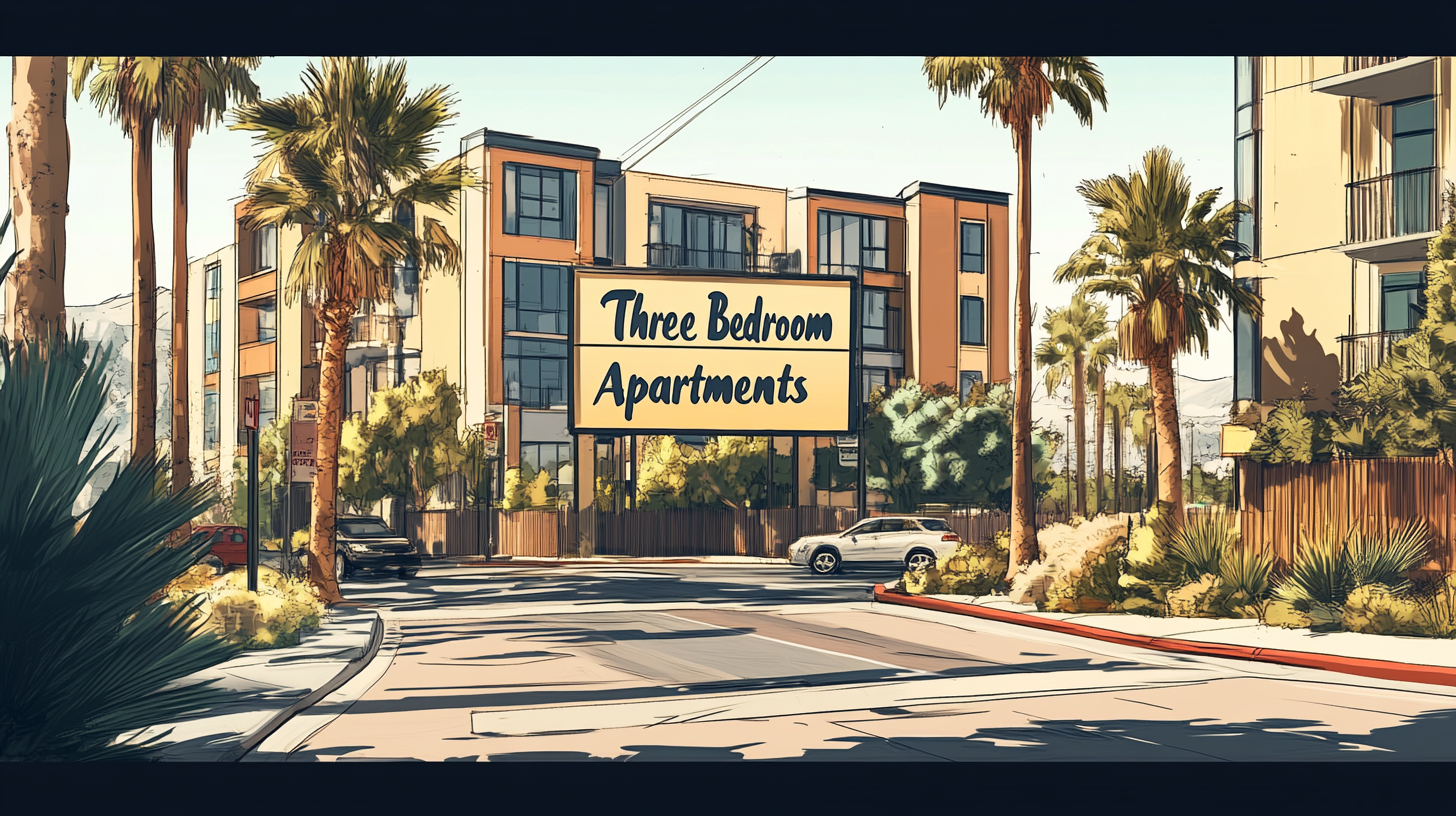
The model created by study author Benjamin K. Couillard, a University of Toronto PhD candidate in economics, also found that building more family-size — three-bedroom or larger — units would increase births 2.3 times more than spending the equivalent amount on a larger quantity of small units.
Couillard, who focuses on urban economics and housing, modeled the impact of housing prices on fertility with U.S. Census data, then used that model to simulate the impact of two equal-cost counterfactual policies — one subsidizing three-bedroom units, and the other subsidizing one-bedroom units.
He explained why even though both policies increased fertility, focusing more on three-bedroom units is more effective. “When we focus on these small units, it does have a spillover effect on the rents of the larger units, and that can increase fertility,” said Couillard in a phone interview. “The one-unit policy makes it easier for people to move out of their parents’ place. It also gets some of these roommate households that would be three people renting a three-bedroom unit … into individual units … and that does open up more of these larger units for families.”
“But by and large … the largest impact of building more of these small units is it just causes more people to end up living alone — they’re not able to take that next step,” he continued. “[The one-bedroom policy] ends up with more total units … yet the large unit policy, the three-bedrooms, ends up having a larger effect on fertility because it has a larger effect on the rents of these three-bedroom units themselves.”
So what would that look like in practice?
Americans Are Willing to Pay for Family Friendly Apartments by Lyman Stone and Bobby Fijan
Couillard’s paper reinforces another recent study from the Institute for Family Studies by Lyman Stone and Bobby Fijan, which found that even though Americans prefer single family homes to apartments for raising children, they are willing to pay more per square foot for apartments with extra bedrooms in the same amount of floor space — and especially so for larger apartments.
This result is consistent with my earlier Free Cities Center findings that in many in-demand California locales, rents for three-bedroom apartments are often more expensive per square foot than two-bedroom apartments. That’s the opposite of the general trend of larger apartments being cheaper per square foot, which highlights the unmet demand for family-size apartments in America’s top cities.
Stone and Fijan’s study, which surveyed over six thousand Americans to assess their preference for apartment features, layouts and sizes, provides insight into what’s achievable and in-demand for developers today, including overlooked financial benefits for building family-size units.
“Our entire study is based on showing people unit boxes that exist within US apartments,” said Fijan in a phone interview. “The advantage of that was that it is then therefore extremely applicable to building within the current building envelope.”
The study found that among people who want or have children, there was a preference for having an extra bedroom, while even among those who do not want any children, 30% preferred a unit with an extra bedroom over extra living space.
The paper also used American Community Survey data from the U.S. Census to compare the relative vacancy rates and rental cost burden — a proxy for the costly risk of nonpayment — across apartment sizes. It found three-bedroom units have an average six-month longer tenancy, while renters of larger units pay only a quarter of their incomes in rent, compared to a third for studio renters.
“I am trying to influence real estate developers,” continued Fijan. “We all know design matters to some degree. Which are the things that actually drive rents? The biggest one, which we’re trying to show — for someone interested in having children — is having more rooms.”
Possible Reforms and Progress
In terms of policy changes to promote building units with more bedrooms, the study suggests revisiting parking minimums that require per-bedroom parking, and allowing single-stair residential buildings of up to four stories, which would make more space for bedrooms than the current double-stair requirement.
When asked what policy change would help the most, however, Fijan focused on revisiting the structure of incentives for producing income-restricted “affordable” housing, which tends to focus on the number of affordable units, instead of the number of people who can be in affordable housing.
“I would not want any incentives to be tied to a number of units. A better definition would be a number of bedrooms,” said Fijan. “I don’t think there should be a benefit to creating three, four-hundred-square-foot studios, that are all affordable — that is better than one 1,200-square-foot three-bedroom that is affordable.”
On January 28, Fijan officially launched The American Housing Corporation, a venture-backed, vertically-integrated developer and manufacturer of prefabricated row-homes, with development pipelines in Texas, New Mexico, California, Washington and Montana.
Fijan’s latest efforts show that even if government policy changes do not materialize, the free market has a strong appetite for bringing more family-size housing to America’s cities — and proving urban renewal may just be the next great American industry.
Kenneth Schrupp is a Los Angeles-based reporter.